In a deeply personal and insightful address, Vaidya Balendu Prakash, a practitioner of integrated medicine, shared his extensive knowledge and experiences concerning pancreatitis. He spoke not as a conventional gastroenterologist but as a clinician who has spent decades observing, documenting, and treating this progressive and often devastating disease. His message offers a unique perspective that bridges modern diagnostic science with a time-honored treatment protocol.
A Personal Journey into a Confident Protocol
Vaidya Prakash’s journey began with a personal tragedy. On the day he received his medical degree in 1984, his father, also a Vaidya, suffered a severe heart attack. While his father was recovering, a middle-aged patient from Chandigarh arrived, gravely ill with severe pancreatitis, a distended abdomen, and a fever. His father, seeing the patient’s condition, believed it to be incurable. However, Vaidya Prakash, in his father’s absence, took on the case. Through a regimen of dedicated effort and an inherited remedy, the patient made a full recovery. The large cyst in his abdomen solidified and calcified. This success was a pivotal moment for Vaidya Prakash, solidifying his confidence in the protocol and inspiring him to dedicate his life to its study.
The Alarming Reality: Pancreatitis in a Modern World
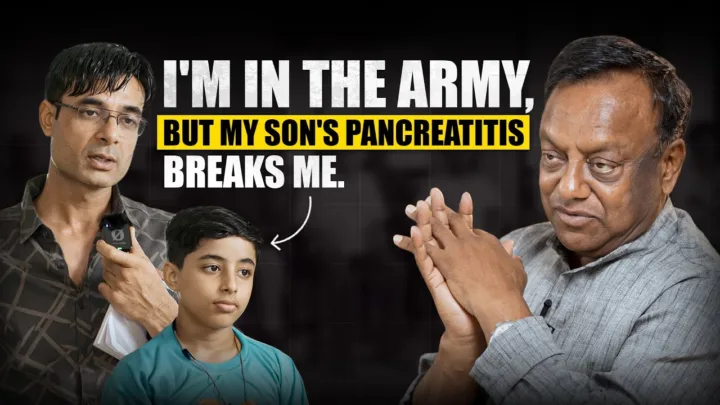
According to Vaidya Prakash, pancreatitis is a progressive disease that has become increasingly prevalent, especially among youth. He quotes a patient who said a broken bone was less painful than pancreatitis, and a Major who claimed a gunshot wound was not as agonizing. The disease, where the pancreas’s own digestive enzymes begin to attack and “eat” the organ a process known as autophagy is a terrifying condition where the “protector becomes the destroyer.”
He emphasizes that his clinical findings challenge many preconceived notions about the disease, particularly those based on Western data. Through meticulous documentation and analysis of his patients’ demographics, he has uncovered several surprising statistics:
- Geographical Prevalence: Contrary to studies that suggest a higher prevalence in South India, his data shows that the largest number of patients come from Uttar Pradesh, followed by Maharashtra, Gujarat, and Delhi.
- Alcohol’s Role: While alcohol is commonly blamed, his data reveals that approximately 67% of his patients never consumed alcohol, and an additional 20% did so only occasionally without purchasing it themselves. This suggests that the narrative around alcohol as the sole cause is misleading, and other factors deserve more attention.
- Late Sleeping: A particularly striking discovery was that 93% of his patients regularly slept late, after midnight. He links this habit to a lack of melatonin, a hormone produced at night that helps reduce inflammation in the liver and pancreas, thereby increasing oxidative stress on these vital organs.
Redefining Pancreatitis: Acute vs. Chronic
Vaidya Prakash uses the Cambridge Classification to provide a clear distinction between the two types of the disease, a point often misunderstood by both laypeople and some medical professionals.
- Acute Pancreatitis: This is defined by inflammation without any permanent structural changes to the pancreas on imaging. A person can experience ten or fifty attacks, but if the organ’s morphology remains intact, the condition is still considered acute.
- Chronic Pancreatitis: This is diagnosed when there are irreversible morphological changes to the pancreas, regardless of whether the patient has had a severe attack or not.
His protocol’s core objective is to prevent the progression of acute pancreatitis to chronic, and to halt the advancement of chronic pancreatitis to a more severe state.
The Treatment Protocol: A Blend of Old and New
Vaidya Prakash describes his treatment as a unique integration of modern diagnostic tools and a traditional therapeutic approach.
1. Diagnosis and Emergency Care: He uses modern diagnostics like CT scans and MRCP to confirm the diagnosis and monitor the disease’s progression. For immediate relief during a severe attack, he relies on modern emergency medicine and painkillers, a temporary measure until his protocol takes effect.
2. The “Amar” Medicine: His primary medicine, known as “Amar,” is a proprietary formula given for approximately one year. He notes that while there’s no fixed, scientifically backed duration, 90% of patients who complete this regimen remain healthy. He adds that this medicine works on the root cause of the disease, which is why patients can eventually stop needing painkillers and digestive enzymes.
3. Diet and Lifestyle: His protocol emphasizes a disciplined routine, known as Aahar-Vihar. It’s centered on a balanced diet of 2000-2200 calories per day, including three meals and three snacks. He stresses the importance of eating at fixed times, consuming about 25-30 ml of fat per day, and taking small sips of water during meals. Adequate sleep is non-negotiable, as is a certain amount of physical and mental rest. His treatment also includes other supplementary medicines for liver protection, digestion, and correcting vitamin deficiencies like B12 and D3, which his research found in 84% of his patients.
Success, Evidence, and a Final Plea
Vaidya Prakash’s success criteria for his patients are multi-faceted: being symptom-free for one year, having normal test parameters, showing no disease progression on MRCP, and returning to a healthy BMI. The ultimate “judge” of success, he says, is the patient’s own testimony that they are feeling well. He claims that over 70% of his patients have gone on to live healthy, normal lives.
He also presents a compelling statistic: while conventional data suggests that 20-55% of pancreatitis patients go on to develop cancer, his protocol has seen only one case of pancreatic cancer out of 2,200 patients over 30 years a patient with genetic pancreatitis who passed away after 27 years of living with the disease.
He concludes by stating that while his work is rooted in empirical success, it lacks large-scale scientific validation. He makes a heartfelt plea to the government and society to support his efforts and invest in research to validate and expand his findings. By doing so, he believes India can lead the world in finding a preventative and curative solution for pancreatitis.