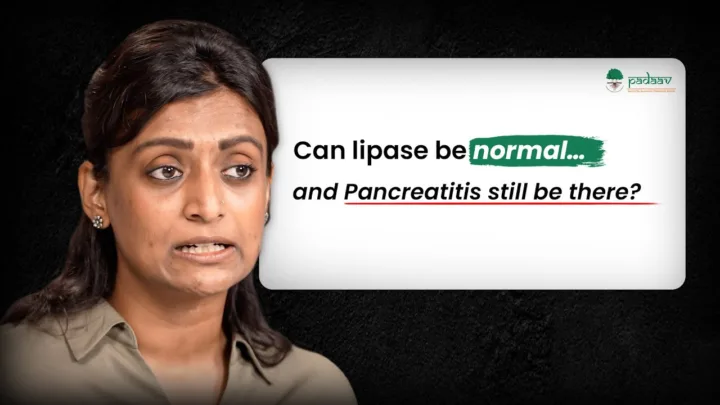
Insights from Vaidya Shikha Prakash (Padaav) on Patient Questions from Reddit
Pancreatitis patients often face confusion regarding their symptoms and prognosis. Vaidya Shikha Prakash addresses common anxieties, distinguishing between different pain types, clarifying diagnostic limitations, and discussing the serious link between chronic inflammation and pancreatic cancer.
Part 1: Decoding the Pain and Symptoms
Patients frequently struggle to differentiate between symptoms, leading to fear and uncertainty.
1. Acute vs. Chronic Pain
Vaidya Prakash clarifies the fundamental difference in pain:
-
Acute Pancreatitis Pain: This is severe, excruciating, and sudden in onset. It typically does not start gradually; it hits hard and is often unbearable, requiring immediate medical intervention.
-
Chronic Pancreatitis Pain: This is usually described as a dull, nagging pain that persists but does not necessarily send the patient to the emergency room. This pain signifies underlying inflammation but is less severe in intensity than an acute attack.
2. The Heart Attack Mimic
-
A Common Mistake: The pain from an acute pancreatitis attack is often so severe and located on the left side of the body that it mimics a heart attack. This is a common situation in emergency rooms, where doctors must work quickly to differentiate between the two potentially fatal conditions.
3. General Symptoms
-
Symptoms like vomiting, fever, and tachycardia (rapid heartbeat) should never be dismissed as a simple stomach bug. These are common indicators of a serious acute pancreatitis attack.
Part 2: Diagnosis, Progression, and the Cancer Link
Vaidya Prakash addresses the critical issues of late diagnosis, safety of diagnosis, and long-term risk.
1. Diagnostic Limitations (The Gas Problem)
When patients complain that their doctors dismiss their high lipase levels because nothing was seen on the ultrasound:
-
-
Pancreas Location: The pancreas is a retroperitoneal organ, meaning it is located behind the abdomen.
-
-
The Issue: It is often obscured by gas or its inflammation is too mild to be visible on basic ultrasound, leading to frustrating delays and dismissals of legitimate symptoms. Doctors must often rely on specialized scans (CT/MRI) and clinical symptoms.
2. Salivary Gland Swelling
While not directly connected to the pancreas, swelling of the salivary glands can occur due to two main reasons:
-
Dehydration: Extreme dehydration, common during pancreatitis attacks, can cause swelling.
-
Systemic Inflammation: The generalized inflammatory state of pancreatitis can cause inflammation in other glandular tissues, including the salivary glands.
3. The Cancer Marker Scare (CA 19-9)
Patients often panic when their CA 19-9 cancer marker is highly elevated (e.g., 4,500).
-
The Reality: High CA 19-9 levels are often seen in severe pancreatitis cases with extreme inflammation, not just cancer.
-
The Action: Because the symptoms of severe pancreatitis and pancreatic cancer are similar, doctors must conduct thorough investigations (EUS, biopsy) to rule out cancer completely.
4. Progression to Cancer
The most pressing risk of chronic inflammation is long-term progression:
“If chronic pancreatitis is not treated and there is chronic inflammation and substantial weight loss is happening… there is a very high chance that it can actually convert into cancer.”
Effective, root-cause treatment is seen as a preventive measure against pancreatic cancer progression.
Part 3: Debunking Myths and Finding Stability
-
Myth of Quick Recovery: If pain subsides on its own, it does not mean the disease is gone. Recovery requires stabilization of the underlying organ damage.
-
Unpredictable Disease: Pancreatitis is highly unpredictable. The number of attacks one can sustain has no limit (one patient cited over 100 attacks).
-
Alcohol and Risk: While alcohol is damaging, the patient who only spent a few hours in the hospital after drinking (30 drinks a week) was considered exceptionally lucky that his symptoms were managed quickly. The clear medical advice remains that alcohol is a “big no” for anyone diagnosed with the disease.
-
Managing Chronic Pain: The “dull pain” reported by chronic patients is common; it suggests the disease may have progressed from acute to chronic but is still active.
Vaidya Prakash concludes that due to the unpredictable and critical nature of Pancreatitis, patients must seek specialized care, manage symptoms under medical supervision, and never self-medicate or ignore pain.