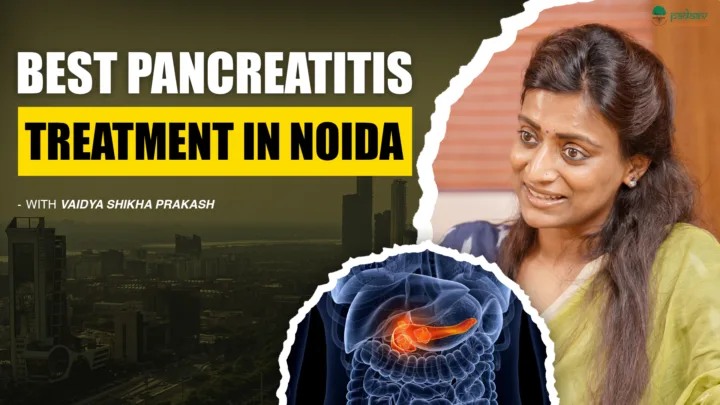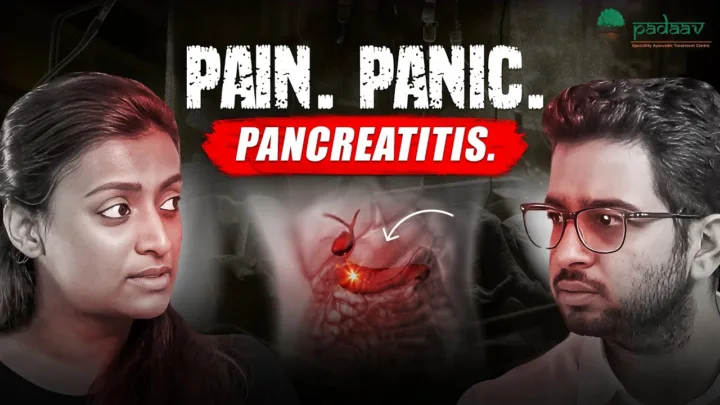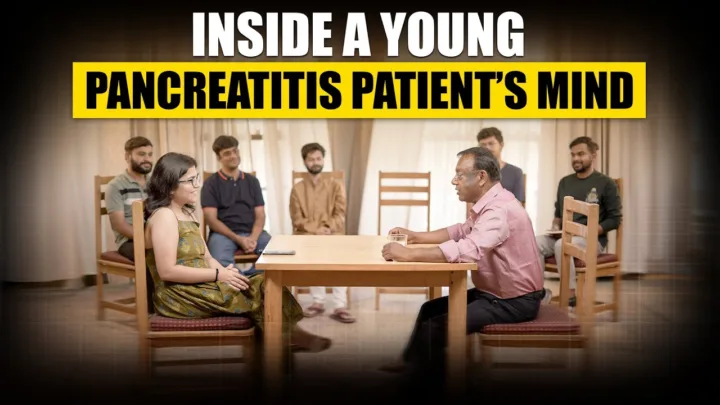
The journey through chronic pancreatitis often feels like a constant battle against physical pain, financial strain, and the fear of the unknown. As Vaidya Shikha Prakash and her team emphasize, every patient coming to Padaav Ayurveda seeks a return to a “normal life.” However, achieving this requires more than just medicine; it demands a fundamental shift in awareness, discipline, and daily lifestyle.
Understanding Pancreatitis: The Inflamed Organ
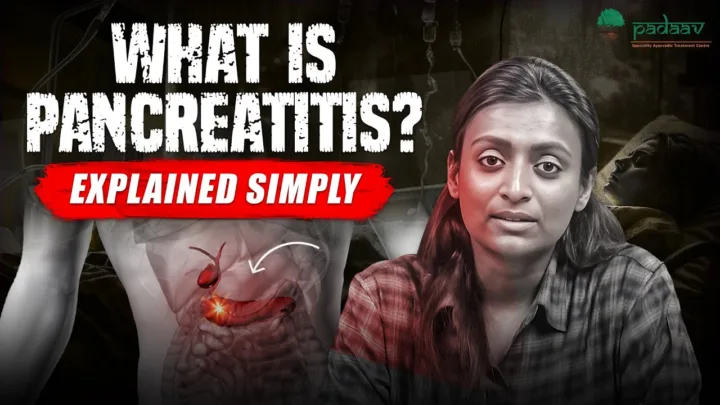
Pancreatitis is the inflammation (-itis) of the pancreas. It is not a condition one can self-diagnose based on simple stomach pain; it requires clinical confirmation.
- Symptoms of an Acute Attack: The pain is often unbearable worse than any other typically localized on the left side (where the pancreas is located) and often radiating to the back. It is accompanied by severe vomiting, and even water is difficult to keep down. The patient may walk hunched over.
- Diagnosis: Confirmation is typically done through blood tests (elevated serum amylase and lipase) and imaging like CT scans or MRCP to assess the severity and extent of damage.
- Severity: The first attack can be fatal, leading to multiple organ failure. It is a medical emergency that demands immediate radiological assessment to determine the extent of tissue damage.
The Pancreas: A “Very Busy Organ”
The pancreas is far from irrelevant; it is a vital and hardworking organ. It performs two critical functions:
- Hormone Production (Endocrine): It produces Insulin, the hormone essential for regulating blood sugar. Its health is directly related to conditions like diabetes and PCOS.
- Enzyme Production (Exocrine): It produces enzymes necessary for the breakdown and digestion of protein, carbohydrates, and fats.
Modern life, characterized by instant gratification, high-calorie processed foods, and constant mental and physical stress, has significantly increased the workload and stress on this small, vital organ.
The Pathological Progression and Irreversible Damage
When the pancreas is under constant stress, inflammation (pancreatitis) develops, hindering its normal duties of producing hormones and enzymes.
- Consequences of Dysfunction:
- Diabetes: Impaired insulin production leads to high blood sugar.
- Malabsorption: Difficulty breaking down food causes persistent vomiting, severe weight loss, and oily stools (fat malabsorption).
- Fatigue & Bloating: The body cannot absorb nutrients, leading to chronic fatigue, low productivity, bloating, and gas.
- Irreversible Damage: Repeated attacks (Recurrent Acute Pancreatitis) or silent progression lead to scarring (fibrosis) and permanent structural damage (calcification or morphological changes) in the pancreas. This damage is irreversible.
- Treatment Goal: The objective of treatment at Padaav Ayurveda is not to reverse the existing damage (a myth), but to halt the progression of the disease. The goal is to keep the patient clinically stable, free from recurrent attacks, and able to live a normal, healthy life by managing the condition effectively.
Root Causes: Challenging the Alcohol Myth
While alcohol is a known cause, clinical experience at Padaav Ayurveda, documented through two decades of observation, reveals that the primary drivers are changing and often overlooked:
- Lifestyle is Key: Research, including that for the book “Granthi Ki Gutthi,” highlights the significant role of heredity, maternal/paternal lifestyle, and stress.
- Children are Affected: Vaidya Shikha Prakash shares the shock of seeing cases, even in very young children (like a two-and-a-half-year-old named Suryansh), shattering the misconception that “pancreatitis is only caused by alcohol.” The increasing pattern of the disease across all age groups underscores a widespread lifestyle problem.
- The Power of Observation: Through meticulous documentation (starting with just 12-13 cases and growing over 27 years), the clinical team identifies patterns, such as 88% of patients having Vitamin D deficiency and a high prevalence of elevated cortisol (stress) levels, highlighting underlying issues beyond diet and alcohol.
The Long-Term Discipline: The 21-Day Alignment
The treatment for pancreatitis is built on an integrated system: Ahara (Food), Vihara (Lifestyle), and Aushadh (Medicine). The 21-day stay at the hospital is designed to reset the body and mind by enforcing compliance.
1. Ahara (Food): Precision and Balance
- Portion Control & Timing: Patients learn the value of eating on time, portion control, and when not to eat a crucial skill for a person with an impaired digestive system.
- Balanced Nutrition: The focus is on providing “Bal Khana” (food that provides strength/energy), emphasizing protein as the building block for recovery.
- Requirement: Patients learn to calculate protein needs (approx. 0.8 to 1 gram/kg of body weight) from simple sources like curd (दही), paneer (पनीर), dal (दाल), or eggs (अंडे), not necessarily powders or supplements.
- The Six Tastes: Meals are planned based on the six tastes (षड रस) described in Ayurveda (sweet, sour, salty, pungent, bitter, astringent) to stimulate appetite (अरुचि) and digestion, often incorporating patient preferences (e.g., moong dal soup with lemon and pepper).
2. Vihara (Lifestyle): Resetting the Clock
- Sleep Cycle: Patients follow a strict sleep-wake cycle (lights off at 10 PM, wake up at 6 AM) to reset the body’s circadian rhythm. This addresses chronic fatigue, which often plagues modern life.
- Mindfulness: Patients learn that physical health relies on behavioral changes. Vaidya Shikha Prakash notes, “Unless you make that change, that gear change, no shift can come in your life.” Success relies on the patient’s honesty and discipline in maintaining the routine at home.
3. Aushadh (Medicine): Stabilizing the System
- 21-Day Protocol: Patients undergo a structured 21-day protocol to stabilize their condition, assess their individual response to the initial medicines, and fine-tune dosages based on blood reports and clinical symptoms. This comprehensive approach is far more effective than an outpatient (OPD) prescription, which often suffers from compliance issues.
Hope and Transparency: The Ultimate Goal
The recovery of a patient like Nikita (who made a fantastic recovery after 17 ERCPs and a lifelong fear of food, proving that change is possible) underscores the core philosophy.
- The ‘Leap of Faith’: Recovery requires belief in the treatment and the guidance provided. The constant fear driven by “Googling” symptoms (which often results in a prognosis of death or cancer) must be replaced by a conscious effort to manage the disease and learn to live well with it.
- Final Message: Pancreatitis is a serious disease that should be treated seriously. The treatment is an integration of medicine, food, and lifestyle not one component alone. Stay in touch with your doctor, do not self-treat, and focus on stabilizing the condition to ensure a good quality of life. The ultimate objective is to restore health and improve daily function.