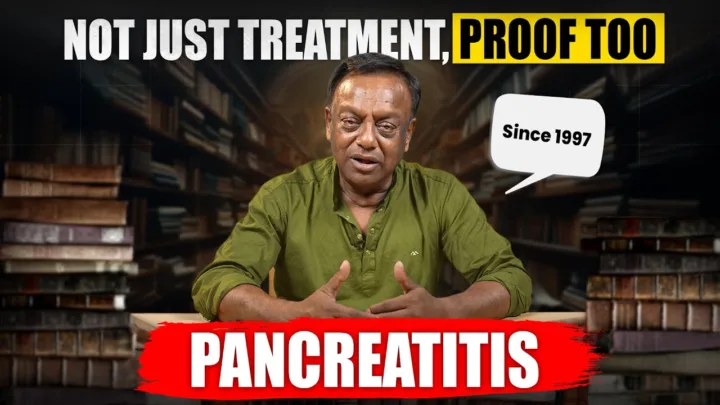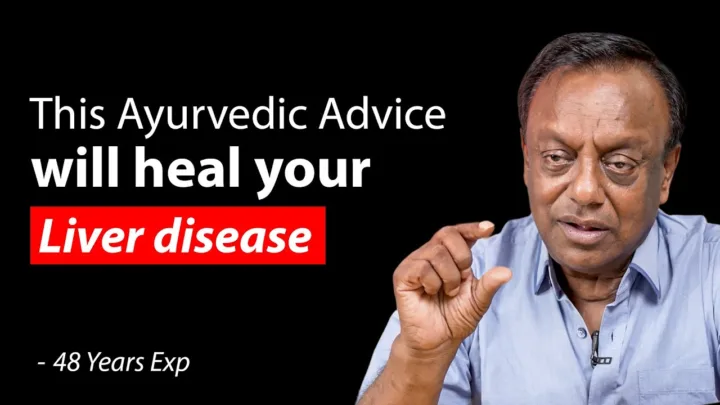
This is the memoir of Vaidya Balendu Prakash, tracing his path from a small clinic in Meerut to becoming a globally recognized Ayurvedic practitioner, detailing his early struggles, life-altering patient recoveries, and his first, astonishing foreign travels to Pakistan and the UK.
Part 1: The Making of a Vaidya (1978–1986)
Vaidya Prakash’s journey began after completing his B.Sc., when he chose to pursue Ayurveda. He enrolled in a newly established Ayurvedic college in Delhi in 1978 and simultaneously worked at his father’s (Late Vaidya Chandra Prakash) clinic in Meerut.
-
Passion for Pharmacy: His main interest lay in compounding medicines, especially Rasa formulations (mercurial preparations), a meticulous and challenging process.
-
A Personal Loss: After six years, just as he earned his B.A.M.S. degree, he lost his father and mentor at the young age of 25. His dreams of his father treating patients while he compounded medicines collapsed.
-
The Humble Start: He continued his practice from a small wooden cot (takht) in a narrow lane in Meerut, treating common ailments. Despite limited resources, his father’s legacy of successfully treating some cases of blood cancer meant patients sought him out.
Part 2: The Defining Cases and the Rise to Prominence
The course of his career changed dramatically with two impossible cancer cases.
Case 1: The 40-Day-Old Child (1986)
-
A 40-day-old baby, diagnosed with Acute Leukemia and Down Syndrome at three major Delhi hospitals, was brought to him. The parents, hopeless, simply placed the child in his lap, asking him to “either cure him or kill him.”
-
Vaidya Prakash administered a newly compounded medicine (Boli Pani). The child made a complete recovery, a result he achieved without expecting it.
Case 2: The London Patient (1986)
-
A child of an NRI from Ireland living in London was diagnosed with Acute Lymphoblastic Leukemia in 1982. The child underwent chemotherapy, radiation, and an autologous bone marrow transplant (BMT) but relapsed six months later.
-
Doctors at the Royal Marsden Hospital in London declared the child had only three weeks to live. The parents brought the boy to India. Despite the doctor’s prognosis, the father insisted Vaidya Prakash treat him.
-
The Vaidya treated the child using formulations based on silver and mercury (Parada). The child recovered. This recovery, following a BMT failure, cemented the Vaidya’s fame.
Part 3: The Astonishing First Foreign Trip (Pakistan, 1987)
In October 1987, a new opportunity arose via a Muslim family from a village near Garhmukteshwar (whose relative had been cured of cancer by his father). They requested he travel to Karachi, Pakistan, to treat another relative.
-
The Passport Miracle: Vaidya Prakash, remembering his meeting with the then-Science & Technology Minister, Dr. K.R. Narayanan, called him for help. Dr. Narayanan arranged for his personal secretary to accompany the Vaidya to the Passport Office. In an astonishing 15 minutes, a passport was issued. Due to an error on the form, his official name became “Vaid Balendu Prakash” (Vaid as the first name).
-
The Validity: The passport was uniquely inscribed: “Valid for Pakistan only” and “Valid for 15 days.”
-
Arrival in Karachi: Upon landing, he was met by the host, Shakeel Ahmed Khan (Vice President of Habib Bank). Surprised to see a young man, Khan immediately drove the Vaidya to the Saddar Police Station for Police Reporting—a requirement for Indian visitors at the time. Vaidya Prakash was terrified, thinking he was being arrested, but the police treated him with the utmost respect.
-
Cultural Shock (Diet): At Khan’s wealthy home, the Vaidya experienced a different Muslim culture than he was used to in Meerut. When the cook accidentally brought meat (gosht), Khan angrily scolded him. Vaidya Prakash, however, confessed: “If I wanted to eat only vegetables (tarkari), why would I come to Pakistan?” This broke the ice, and the hosts delighted in sharing their rich, delicious cuisine (as they usually only cooked meat, fish, and chicken). Despite his best efforts and the exceptional hospitality, the child sadly passed away on Diwali, October 21, 1987.
Part 4: The Cultural Lessons of London (UK, 1988)
In January 1988, following his Pakistani fame, Vaidya Prakash was called to London to treat the wife of a major Pakistani industrialist. His passport was again extended, now to include the UK and other countries.
-
Discipline and Punctuality: At London’s Heathrow Airport, he was struck by the cold discipline and punctuality. He saw people moving quickly and systems working flawlessly (from underground trains to traffic lights).
-
The Meal Blunder: Used to Indian hospitality, he declined a small quarter-plate lunch of baked potato, boiled beans, and plain chicken, expecting a grand Indian meal later. He later realized this was the entire lunch. When he tried to order more, the host did not offer, as he had already refused once. He went back to his Pakistani patient’s home and promptly asked the cook to make him two traditional Indian parathas.
-
The Menace of Meningitis: The most impactful lesson came from watching BBC television. Following the death of a child from meningitis, the parents immediately launched a national campaign. The entire country instantly mobilized, with money being collected on the streets for research. This inspired Vaidya Prakash to pursue his own research foundation for cancer treatment.
Conclusion: The University of Travel
After his return, Dr. Narayanan officially helped him register his new passport, solidifying his official name as Vaidya Balendu Prakash. These travels, the first of over 300 international trips he would undertake, taught him that travel and meeting people are the greatest universities in the world, surpassing all formal education.