Insights from Vaidya Balendu Prakash on Chronic Disease Management
Vaidya Balendu Prakash addresses two major anxieties of Pancreatitis patients: the fear of progression despite medication, and the safety of the specialized Ayurvedic drug, Amar. The core message is that while medicine can stabilize the disease, the patient’s lifestyle choices determine the outcome.
Part 1: The Myth of Self-Recovery and Progression
Anil Char (27) described his chronic condition: recurring acute attacks between 2017–2023, followed by a persistent pain that began after calcification (structural damage) was detected in 2024.
Why the Disease Becomes Permanent:
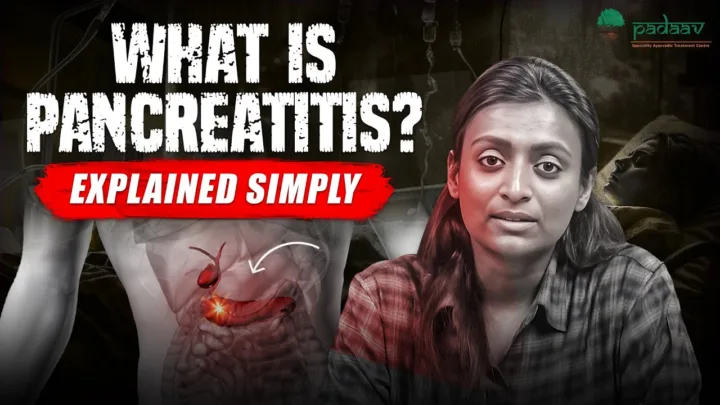
Vaidya Prakash explained the difference between Acute and Chronic Pancreatitis using the Cambridge Classification:
-
Acute: Involves only inflammation/swelling, which is reversible.
-
Chronic: Involves structural changes (like calcification/scarring) in the pancreas, which are not reversible and lead to long-term issues.
Because Anil’s case became chronic, simple reversal is no longer possible. Instead, the goal is stabilization:
“The pain might stop, but simply stopping the pain is not considered recovery from Pancreatitis.”
The Drug Efficacy Standard:
Vaidya Prakash states that clinical success requires consistency. His data shows that the progression of the disease is stopped in 98% of patients taking the Amar medicine. This 98% success rate is the measure of the drug’s effectiveness, preventing the patient from worsening or developing cancer.
Part 2: The Truth About Amar Medicine Safety (Free Metals)
A patient, Prabhat Kumar, raised a common concern expressed by conventional doctors: the worry that the Amar medicine, being a metal-based formulation, contains “free metals” that could harm body organs.
-
The Scientific Counter: Vaidya Prakash strongly refuted this, stating that the concern is based on limited knowledge and misunderstanding of Rasa Shastra (Ayurvedic alchemy). He emphasized that his medicine has been rigorously studied, possesses a Patent from the Government of India, and has published research papers.
-
The Transformation: The medicine’s efficacy lies in the process of transforming toxic metals into non-toxic, life-saving mineral complexes. He used the analogy of Sodium (a metal) and Chlorine (a toxic gas), which combine to form non-toxic Sodium Chloride (salt), essential for life. The drug contains no harmful “free metals.”
Part 3: The Biggest Enemy; Lifestyle (Ratri Jagran)
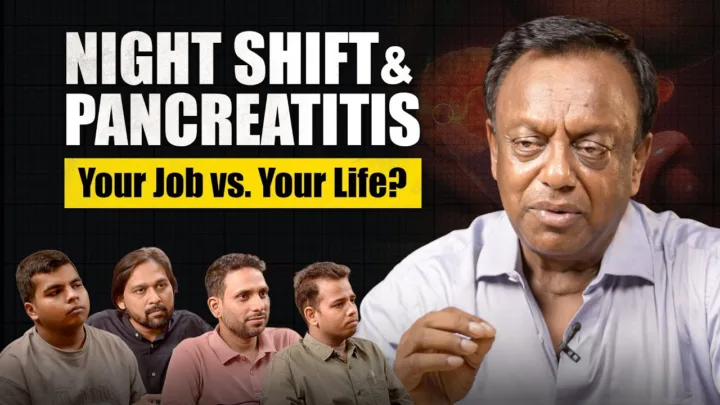
Vaidya Prakash directly linked the rise of Pancreatitis to a critical lifestyle shift in modern society: disrupting the Circadian Rhythm.
-
The Cause: He pointed out that 93% of his Pancreatitis patients are those who sleep after 12:00 AM (engaging in Ratri Jagran or night waking). This is a result of modern conveniences like electricity and mobile phones, which eliminate the natural cues that once made people sleep early.
-
The Consequence: Sleeping late prevents the body from undertaking necessary rest and healing. This chronic lack of timely sleep significantly increases Oxidative Stress, leading to continuous inflammation in the liver and pancreas.
-
The Test: He warned patients (like the one whose relapse was due to non-compliance) that if they return to late-night habits, they will relapse within months. Discipline is the cure.
Part 4: Diagnosis and Management Insights
-
Silent Damage: Many patients, especially those with Fecal Elastase below 200 (indicating enzyme deficiency), stop having painful attacks because the pancreas is already too damaged to mount an inflammatory response. The disease continues silently, leading to conditions like cancer later.
-
Weight Loss and Other Symptoms: Persistent symptoms like weight loss, diarrhea, or continuous discomfort are signs of ongoing malabsorption and inflammation (Gastritis, Colitis) that must be addressed, even if the severe acute pain has stopped.
-
The Goal: The purpose of the treatment is not just to cure the disease, but to give the patient a stable life. “What happened is done. The one who died in the house is dead. I will ensure nobody dies now… they will die at their natural age.”