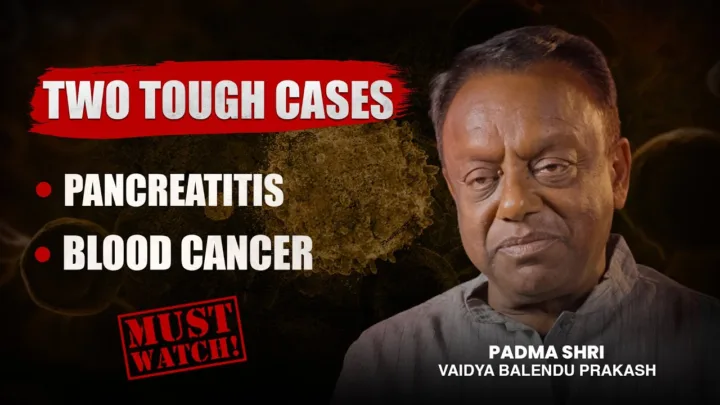
In a profoundly insightful conversation with Dr. Sunil Rai, President of UPES University, Padma Shri Vaidya Balendu Prakash, one of India’s most esteemed physicians, shared his lifelong journey to redefine Ayurveda not as a system of folklore or miracles, but as a rigorous, evidence-based science. His mission is to bridge the vast gap between traditional knowledge, which is rooted in experience, and modern technology, which demands measurable proof.
The Paradox of Traditional Medicine
Vaidya Prakash begins by addressing the central skepticism of the youth (Gen Z): that Ayurvedic and traditional systems are not “process-based” or “research-based,” unlike the highly technological allopathic system.
He refutes this by arguing that Ayurveda is based on Anubhavajanya Gyan (knowledge born of experience) accumulated over thousands of years. Just as trees bore fruit and babies were born before scientific theories explained them, the healing properties of Ayurvedic preparations, documented in texts like Bhavprakash Nighantu, are based on countless successful experiments by our ancestors.
He states that the fault lies not with Ayurveda, but with our ignorance of the science behind it. Because we received this knowledge “for free” as a heritage, we failed to value it, while we are easily impressed by technology and systems imported from the West.
The Personal Quest for Scientific Proof
Vaidya Prakash’s commitment to evidence is deeply personal and driven by a scientist’s curiosity.
- The Power of Observation: His father, Vaidya Chandra Prakash, practiced ancient medicine, successfully treating patients with life-threatening conditions like bone T.B. and chronic ulcers. Vaidya Prakash noticed that while many patients did not recover, the consistency with which some of the most difficult cases were cured pointed to a scientific law at work.
- The Genesis of ‘Amar’: His father’s most famous medicine, Amar, was created from toxic substances (mercury, copper, sulfur) but cured a terminally ill patient. This became Vaidya Prakash’s lifelong puzzle: “I know what I put in, but what does it become?” He realized that to take this science forward, he needed modern tools.
- Early Successes and Failures: His desire for validation led to a series of attempts to collaborate with major medical and government institutions, starting in 1987. Though he achieved breakthrough successes curing a child with terminal blood cancer and developing effective protocols for Migraine and Allergic Rhinitis his work was often dismissed due to professional jealousy, institutional rigidity, and the demand for data that traditional practitioners did not collect.
The Data-Driven Revolution
Vaidya Prakash has since created his own “evidence,” using modern scientific methods to validate his treatments:
- Migraine Breakthrough: He shared the story of curing a patient who suffered from a migraine 30 days a month for years, a condition declared incurable by modern doctors. He discovered the link between the patient’s condition and inflammation in the gut (gallbladder and colon). He developed a protocol that, after a randomized trial at a premier institute, was proven to be highly effective and more so than common allopathic medication, making him a pioneer in the field.
- Documenting the ‘Impossible’: He is a strong advocate for documentation, citing the example of Gregor Mendel, the “father of genetics,” who documented his garden pea experiments, which were only recognized 20 years after his death. Vaidya Prakash meticulously documents his own work, including trials on non-ironic compounds for anemia (found to be better than iron supplements) and protocols for blood cancer.
The Five Pillars of a Cancer-Free Life
Vaidya Prakash discussed the critical need for lifestyle changes, which are the essence of a healthy life:
- Diet: A balanced diet composed of 40% complex carbohydrates, 25-30% proteins (plant and animal), and 15-20% fat. He stresses that one must eat to one’s appetite, follow seasonal food habits, and maintain the right balance (e.g., protein and carbs together).
- Exercise: Moderate exercise, such as three hours per week on alternate days, is sufficient. He warns against Ati-Vyayam (over-exertion), which is a major stressor on the body.
- Sleep: A sound sleep of 6-8 hours is essential for bodily repair. He highlights that sleep deprivation, especially staying up late, is a direct cause of inflammation.
- Stress Management: Acknowledging that stress is unavoidable, he urges the development of an attitude that can bear the pressure without letting it affect one’s sleep and diet. He emphasizes the philosophical teachings of the Bhagavad Gita focus on action, not the outcome to manage mental stress.
- Purpose: Living a spiritual and purposeful life, dedicated to something beyond oneself, provides a crucial layer of resilience.
The Final Call: ‘Jai Aavishkar’ (Hail Invention)
Vaidya Prakash concluded the session with a powerful message about the future of traditional medicine in India.
- He laments the financial burden of illness, citing his data that 1858 patients spent over ₹112 Crores before coming to his clinic. He argues that this money should be invested in research.
- He believes the nation’s slogan, “Jai Jawan, Jai Kisan, Jai Vigyan, Jai Anusandhan,” is incomplete. He calls for a new vision: “Jai Aavishkar” (Hail Invention/Discovery).
- He sees his partnership with institutions like UPES not just as a collaboration, but as a way to give eyes to the blind stick of his medicine through technology like the X-Ray Diffractometer (XRD). This will allow the science of Ayurveda to be formally integrated into modern protocols.
- He emphasizes that “Ganga (traditional knowledge) never stops flowing.” Just as the British controlled the Ganga by building the canal, modern science must control and regulate the knowledge of Ayurveda to make it available to the entire world.